marți, 26 noiembrie 2013

23 reasons it's great to be a tourist

With their worldly sophistication, cheap fisherman pants and penchant for being smiley all the time, tourists can be a much-hated group.
But before you laugh too hard at the lost look in their eyes, or mock too much the clattering chaos of their attempts to board the roof of a minibus with five bags and three cameras swinging from their torsos, understand this: they don't care.
They're having the time of their life. And we all know why. Being a tourist is awesome.
Let us know why being a tourist works for you. Comment below.
1. You can eat like a feudal lord every night, and still lose weight from all the walking. Read more: Guide to Hungary's signature dishes
2. Whether you're terrifying yourself on local transport or basting yourself in the sun next to a bag of beer, it beats what your friends are doing back home.
3. Freedom from the tyranny of socks.
4. The guilt attached to not utilizing your gym subscription is way less severe than it is back home.
"What day is it?" "Feels like Friday."
5. Cold beers on the beach/in a hammock/in bed/in a bar in the middle of the afternoon? Don't mind if I do. Read more: 8 best beer towns in the USA
6. Bringing home a tan and worldly knowledge is like dousing yourself in pheromones. Just be sure to cover up with mosquito spray, to avoid unsightly welts.
7. If you've got any sense, your destination of choice will be significantly cheaper than your home country. Read more: Tightfisted travel poll reveals cheapest trips
8. You can finally finish that book you've been falling asleep with every night for the last three months.
In any other clothes you\'d look out of place.9. The weather. Even the rain seems somehow exotic when abroad. Read more: In defense of rainy days -- why drizzle shouldn't ruin travel
10. The buzz you get walking around a new place knowing you're not at work is one of life's greatest highs.
11. You can get a foot massage every day without anyone thinking you're a fetishist.
In any other clothes you'd look out of place.
12. You can wear anything. Baggy Thai pants with a singlet? Go on, no one will bat an eyelid. Read more: 7 travel fashion trends that should be banned
13. You learn about the country you're visiting through experience, rather than National Geographic. Or CNN Travel.
14. Happy hour is actually worthwhile -- half-price drinks starting just before sunset and extending for at least two hours.
15. You get to try local specialties previously only seen on TV: balut (Philippines), fried monkey toes (Indonesia), tete de veau (calf's head, France) and roasted ants (Columbia). Read more: A traveler's guide to eating insects
16. Those childish antics people get up to in pictures -- fingertips on the top of the Eiffel Tower, posing with fake gladiators at the Coliseum -- yep, you get to do them too now.
Now that\'s what I call a wig.17. The nearest you get to cooking is pointing at the fish you want grilled for your dinner.
18. You get to mingle with a range of nationalities. Then escape them the next day. Read more: Who are the world's worst tourists?
19. With minimal effort -- such as sending a postcard -- you make your friends and relatives think you really care.
Now that's what I call a wig.
20. Those 1980s iPod playlists you compiled especially for the trip go down particularly well with others.
21. Tanned fat looks better than pale fat.
22. You get to wantonly fritter away money with the sudden knowledge that experiences are so much more valuable than things.
23. You can finally jettison your mobile phone and laptop without stress. Phileas Fogg wasn't online for hours at a stretch every day and neither should you be.

10 best cities for a winter vacation

Incessant rain and gray skies make winter a trial.
But hot drinks, snowy slopes, frozen lakes and a bright yellow sun?
That's the kind of winter we can all wrap our mittens around.
The cities below aren't necessarily the greatest in the world, but come winter they could just convince you that they are.
Prague, Czech Republic
With its snow-capped spires and cobbled, winding streets, Prague is a fairytale city that remains relatively tourist-free in the winter months.
The stunning architecture looks even prettier under a sheet of snow, with one of the most beautiful areas being the old town, with its turrets and Romanesque vaults.
Gas street lamps were recently reinstalled throughout the city center, adding a romantic hue to evenings.
Cafes here are ideal for escaping the bitter cold.
"Choco Cafe is a great place to take a breather from intense winter sightseeing in the Old Town," says travel blogger Girl in Czechland. "It's full of comfy chairs and sofas and they have more than a dozen kinds of hot chocolate, which is so thick you can practically stand a spoon up it in it."
Where to eat: Lokál Dlouhá. This recently opened restaurant is known for its svíčková na smetaně (beef tenderloin and cream sauce).
Lokál Dlouhá, Dlouhá 33, Prague 1; +420 222 316 265
Where to sleep: The Alchymist Grand Hotel & Spa is a five-star, fairytale-like hotel in the middle of the city's old town.
The Alchymist Grand Hotel & Spa, Tržiště 19, Prague 1; +420 257 286 011
What to do: After the Christmas markets, there's the fascinating Estates Theatre, where Mozart conducted the world premiere of "Don Giovanni" in 1787.
Estates Theatre, Ovocný trh/Železná Street, Prague 1, +420 224 901 448
More: 24 amazing hours in Prague
Salzburg, Austria
With its backdrop of Christmas carols and traditional markets, this is a perfect city for a winter break.
"Silent Night" was performed for the first time in the Oberndorf on the outskirts of Salzburg on Christmas Eve in 1818.
The city's main market is held in the shadow of Salzburg's Hohensalzburg fortress, but the one held in Mirabell Square is especially popular with foodies who come to sample local delicacies such as halusky -- pieces of dumpling mixed with fried bacon.
Where to eat: Goldener Hirsch on Getreidegasse. This beautiful restaurant is located within the old stables of an historic townhouse. The food is traditional Austrian with a modern twist.
Goldener Hirsch, Getreidegasse 37, Salzburg; +43 662 80840; everyday noon-2 p.m. and 6:30-9:30 p.m.
Where to sleep: The Statkrug. A beautiful four-star Austrian hotel with one of the city's best roof terraces.
The Statkrug, Linzergasse 20, Salzburg; +43 662 8735 45-0
Tromso: One of the world\'s best spots for northern lights.What to do: For a different perspective on Christmas, there's the Christmas manger exhibition at the Panorama Museum on Residenzplatz between November 29 and January 12.
Panorama Museum, Residenzplatz 9, Salzburg; +43 662 620808-730; everyday 9 a.m.-5 p.m.
Tromso, Norway
Tromso: One of the world's best spots for northern lights.
There are several reasons Tromso, known as the capital of the Arctic, is great in winter.
It's widely regarded as Norway's most beautiful city and is a base for spotting the northern lights.
More: Best places to see the northern lights
There are also several fascinating museums, including the Polar Museum, which offers an insight into the history of Arctic expeditions, and the Tromso Museum, which is famous for its Sami exhibitions.
Where to eat: Arcantandria is famous for its shellfish.
Arcantandria, Strandtorget 1, Tromsø; +47 77 60 07 20
Where to sleep: The four-star Clarion Post Bryggen has rooms with floor-to-ceiling windows offering stunning views.
Clarion Post Bryggen, Sjøgata 19-21, Tromsø; +47 77 78 11 00
What to do: The Perspektivet Museum on Storgata offers fascinating insight into Norwegian art.
Perspektivet Museum, Storgata 95, Tromsø; +47 77 60 19 10; Tuesday-Sunday 11 a.m.-5 p.m.
Amsterdam
In winter, Amsterdam's museums are empty, making it the time to visit attractions such as Rijksmuseum or the Anne Frank House.
Built originally to house a circus, the Royal Carré Theatre celebrated its 125th anniversary last year.
Children will love the spectacular performances, which feature athletes from Russia, North Korea and China.
Where to eat: The cozy Restaurant Greetje has traditional Dutch food (and lots of Delft).
Restaurant Greetje, Peperstraat 23-25, Amsterdam; +31 20 7797 450; Sunday-Friday 6-10 p.m., Saturday 6-11 p.m.
Where to sleep: The beautiful five-star 717 boutique hotel on Prinsegracht is housed inside a former sugar trader's residence.
717 boutique hotel, Prinsengracht 717, Amsterdam; +31 20 4270 717
What to do: For Christmas shopping, smaller shopping areas like Haarlemmerstraat in the Jordaan, the Spiegelkwartier and the Negen Straatjes are better than the big department stores.
More: Insider Guide: Best of Amsterdam
Nagano, Japan
As a former Winter Olympics host city, Nagano is a great base for exploring nearby ski resorts.
The natural hot springs on the outskirts are perfect after a day on the slopes.
Beautiful, snow-covered Buddhist temples are worth checking out, as is the Togakushi Minzoku-kan folklore museum, which has a fascinating display about the ninjas who once trained there.
A top tip?
"The Neapolitan pizza oven place Qui E La that's tucked away in a private home in the woods is an even more welcome refuge in winter," says travel blogger Una, founder of lets-get-lost.com.
Where to eat: Fujiki-an on Daimonkikyocho is famous for its soba noodles, which they've been making since 1827. A picture menu makes ordering easy.
Fujiki-an, 67 Daimonkikyocho, Nagano, +81 26 232 2531
Where to sleep: Hotel JAL city on Toigoshomach is a short walk from both the train station and one of Japan's largest wooden temples -- in winter the views over snowy Nagano are breathtaking.
Hotel JAL city, 1221 Toigosyo-machi, Nagano-shi, +81 26 225 1131
What to do: The Zenkō-ji temple, built in the 7th century, ranks as the third largest wooden temple in Japan.
Zenkō-ji (Japanese only), 491-i Nagano-Motoyoshicho, Nagano-shi; +81 26 234 3591
Reykjavík, Iceland
Hiding within -- great geothermal pools.Hiding within -- great geothermal pools.
Although Iceland's capital city is one of Europe's coldest spots, it has plenty of natural hot springs to warm up in (some of the best can be found in the Nauthólsvík area of the city).
The annual Winter Lights Festival, which takes place in February, is a spectacular celebration of winter.
Visitors can try their hand at a wide range of winter sports or skate on the city's Tjörnin pond.
Many cozy coffee houses sell rúgbrauð -- locally made, dark, sweet bread.
"An unmissable experience during winter is a dip in one of the city's many outdoor geothermal swimming pools," says Eliza Reid, who co-founded icelandwritersretreat.com with Erica Green.
"There is no experience quite like soaking in these naturally warm waters with snowflakes tickling your nose. Each swimming pool has its own character and everyone has their favorite."
Where to eat: Dill restaurant in the Nordic House cultural center. Chef Gunnar Karl Gislason is passionate about local produce and the food here is some of the freshest in Iceland.
Dill restaurant, Sturlugötu 5, Reykjavík; +354 552 1522
Where to sleep: Owned by Icelandair, Hotel Marina is a quirky, colorful hotel located in one of the city's trendiest districts.
Hotel Marina, Myrargata 2, Reykjavik; +354 560 8000
What to do: Harpa, the city's concert hall, was designed by Danish-Icelandic artist Olafur Eliasson to reflect Iceland's geology. It's constructed from more than a thousand glass blocks.
Harpa, Austurbakki 2, Reykjavík, +354 428 5000; daily, 8 a.m.-midnight
More: How to be a Reykjaviker: 8 ways to be cool in Iceland
Berlin
Christmas markets are the ideal destination for pre-Christmas retail therapy -- Berlin has more than 60 of them.
With a miniature train and puppeteers, the market at Mitte at the Rote Rathaus is ideal for children.
Gendarmenmarkt is famous for handcrafted goods.
The two-story Käthe Wohlfahrt Christmas store on Kurfürstendamm is worth a look -- it's open all year and sells everything from tree decorations to candles. With 6,500 restaurants, 546 ice cream parlors and cafes and 2,800 snack stalls, there's no shortage of food.
Where to eat: Die Berliner Republik on Schiffbauerdamm is famous for both its food (currywurst is a specialty) and its beer, thanks to a stock exchange-style system that allows drinkers to purchase their favorite beer at rock bottom prices -- if they order at the right time.
Die Berliner Republik, Schiffbauerdamm 8, Berlin; +49 30 308 722 93.
Where to sleep: Hotel Otto on Knesebeckstraße is located in one of Berlin's quieter neighborhoods. Extras include a "surprise" button in the lift.
Hotel Otto, Knesebeckstrasse 10, Berlin; +49 30 54 71 00 80
What to do: Dr Pong on Eberswalder Strasse much surely rank as one of Berlin's quirkier bars. It's a ping pong bar, and perfectly sums up Berlin's underground nightlife scene.
Dr Pong, Eberswalder Strasse 21, Berlin; Monday-Saturday 8 p.m.-late, Sunday 7 p.m.-late (May-September), 6 p.m.-late (October-April)
Ottawa, Canada
Ottawa's Winterlude festival is one of the world's largest winter festivals.
It takes place from January 31 to February 17 and is famous for its ice sculptures, outdoor concerts and toboggan courses.
The Christmas Lights Across Canada scheme, which runs from December 5 to January 7, sees some of the city's largest monuments and buildings bedecked with Christmas lights.
From January, the city has the world's coolest commute -- the 7.8-kilometer (4.8-mile) Rideau Canal Skateway, which is used by commuters, schoolchildren and students to get through the heart of downtown.
Where to eat: Restaurant 18 on York Street serves traditional Canadian cuisine with a modern twist.
Restaurant 18, 18 York St., Ottawa; +1 613 244 1188
Where to sleep: The Arc Hotel is a warm winter retreat, with a fire in the lobby and complimentary champagne for guests.
Arc Hotel, 140 Slater St., Ottawa; +1 613 238 2888
Lightning up a white Christmas every year.What to do: From January to February visitors can take a spin on the world's largest natural ice rink -- the Rideau Canal.
Rideau Canal Skateway; +1 613 239 5234; January-February
More: How to pretend you're Canadian when you travel
Washington D.C.
Lightning up a white Christmas every year.
If you're arriving in Washington DC by rail, you shouldn't miss the enormous, 30-foot Christmas tree that was given to Union Station by the Embassy of Norway.
In November and December, the ZooLights show at the National Zoo opens late and stages spectacular light shows.
The White House and Lincoln Memorial look especially beautiful in the snow.
During winter months, the Washington Ballet stages performances the Nutcracker.
Where to eat: Equinox Restaurant specializes in what its head chef refers to as "Mid-Atlantic cuisine." He basically means fish, and lots of it.
Equinox Restaurant, 818 Connecticut Ave. NW, Washington, D.C.; +1 202 331 8118, Monday-Friday, 11:30 a.m.-2 p.m., Monday-Thursday 5:30-10 p.m., Friday-Saturday 5:30-10:30 p.m., Sunday 5:30-9:30 p.m.
Where to sleep: The Palomar is a small, vibrant hotel just a short walk from the Whitehouse, the National Mall and the Smithsonian.
Hotel Palomar, 2121 P St., Washington, D.C.; +1 202 448 1800
What to do: Zoolights at Washington Zoo kicks off on November 29 and lasts until January 1. Half a million individual LEDS turn the popular attraction into a veritable winter wonderland.
Zoolights at the Zoo, 3001 Connecticut Ave. NW, Washington, D.C.; +1 202 633 4888; November 29-January 1, daily, 5-9 p.m.
Edinburgh, Scotland
Cobbled streets, a beautiful castle and lovely public gardens make Edinburgh a beautiful city any time of year, but in winter it's breathtaking.
Since the launch of Virgin Atlantic's Little Red service, it's even easier to get to, with regular flights between other UK cities including Manchester and London.
Princes Street Gardens are transformed into a wonderland, complete with ice skating rink, enormous Christmas tree and a Ferris wheel, all in the shadow of the castle.
On the edge of the city, Arthur's Seat is the perfect location for a winter walk and the views from the top are second to none.
Where to eat: Edinburgh isn't about haggis and tatties. For fine dining, One Square restaurant and bar at the Sheraton Grand on Festival Square is the place to go. The drinks menu is impressive -- there are 52 types of gin to choose from.
One Square, 1 Festival Square, Edinburgh, +44 131 221 6422; daily, 7 a.m.-10:30 p.m.
Where to sleep: Jurys Inn is a short walk from the main attractions and offers a warm Scottish welcome.
Jurys Inn, 43 Jeffrey St., Edinburgh; +44 131 200 3300
What to do: A tour around Edinburgh's underground vaults is a great way to learn about the city's fascinating history.

Eight must-see Budapest buildings

Just about every capital city in Eastern Europe seems to have been called "the Paris of the East" at some point.
Unlike most other cities in the region, however, Budapest doesn't need the comparison.
The grand old dame on the Danube is one of Europe's finest capitals by any measure.
The eight landmark buildings below give you a feel for both Pest and Buda -- originally separate cities, divided by the river, but united about 150 years ago to form the modern metropolis.
Visit these sights in the order presented here and they form a walking tour of sorts (see map to the left), albeit with the option of jumping on public transport or taking the odd taxi.
Taxis are easy to spot in their bright new yellow livery. Take the subway and you'll be traveling on the world's second oldest underground railway and, on Line 1, a World Heritage Site.
Parliament
Taking 17 years to build and completed in 1902, this neo-Gothic structure was partly inspired by the UK's Palace of Westminster.
British politician-turned-broadcaster Michael Portillo memorably described it as "one of the most beautiful legislatures in the world, a cathedral of democracy."
Kossuth Lajos Square in front of the building is being renovated, so the best views are currently from the river (Parliament is right on the Pest embankment) or the opposite Buda banks.
St. Stephen's Basilica
Taking even longer -- 50 years -- than Parliament to complete, the biggest church in Budapest finally opened in 1906.
During construction the building's dome collapsed and two of the three lead architects died.
St. Stephen's Basilica contains the mummified hand -- called the "Holy Right" -- of Hungary's founding king-saint, Stephen (István).
The dome is the same height as Parliament -- current legislation forbids anything higher, so Budapest isn't going to get its own version of London's Shard any time soon.
The church is free to enter, though it costs 500 forints ($2.30) to climb up to the observation deck surrounding the 96-meter high dome (closed from November to the end of March).
St. Stephen's Basillica, Szent István tér 1, 1051 Budapest; more on VisitBudapest.travel
Hungarian State Opera House
A lot of building rivalry has gone on in Budapest.
The Austro-Hungarian Emperor Franz Joseph approved (and partially paid for) the construction of an opera house in the city on the condition it was no bigger than the one in Vienna.
Smaller it may have been but it was far more opulent -- the emperor's reported reaction on seeing it at the grand opening in 1884 was to mutter, "These Hungarians!"
You can visit the ornate building on a tour but, even better, see it while watching an opera or ballet performance.
Another World Heritage Site, the opera house is located on Andrássy út, Budapest's grand boulevard full of high-end shops and other magnificent buildings.
Hungarian State Opera House, Andrássy út 22, 1061 Budapest; +36 1 814-7100; more information on performance tickets or guided tours
More: 11 things to know before visiting Hungary
Dohány utca Synagogue
First bridge to stick Buda and Pest together permanently.Also known as the Great Synagogue, this is one of the largest Jewish temples in the world.
Consecrated in 1859, the Moorish revival-style building is a center of Neolog Judaism, a moderate reformed branch of the religion.
The complex also includes a museum and, in the rear courtyard, a memorial to Jewish Holocaust victims in the form of a weeping willow with the names of the dead and disappeared inscribed on the leaves.
An estimated 565,000 Hungarian Jews were murdered in World War II from a prewar population of more than 800,000.
Dohány utca Synagogue, Dohány utca 2, 1074 Budapest; +36 1 343 0420
First bridge to stick Buda and Pest together permanently.
Széchenyi Chain Bridge
Budapest is a city of bridges, but the Széchenyi Chain Bridge (Széchenyi lánchíd) is the granddaddy of them all -- in 1849 it became the first permanent span linking Buda and Pest.
Commissioned by a Hungarian count, after whom it is named, the 375-meter-long suspension bridge was designed by an English engineer and built under the supervision of a Scot.
As with all Budapest bridges, the original was blown up during the siege of the city in World War II -- a broadly similar replacement opened to traffic in 1947.
The bridge is at its most spectacular at night, when fully illuminated.
Széchenyi Chain Bridge spans the Danube between Széchenyi tér on the Pest side and Adam Clark tér in Buda.
More: Budapest's best 'ruin bars'
Royal Palace
The Castle District, yet another World Heritage Site (why not just designate the whole town a World Heritage Site?), dominates the Buda skyline.
Although it actually lacks a castle, the Royal Palace, dominating the southern end, is magnificent.
A royal residence from the 1300s to the end of the Hungarian monarchy in the early 20th century, it was rebuilt time and again through numerous sieges and wars.
It now houses the Budapest History Museum, the Hungarian National Gallery and the National Széchenyi Library.
Like the Széchenyi Bridge, the palace looks particularly magical each evening, when floodlights are switched on.
Royal Palace, Szent György tér 2, 1014 Budapest; +36 1 224 3700
The medieval fisherman\'s guild smells better now.The medieval fisherman's guild smells better now.
Fisherman's Bastion
So named because the fisherman's guild was responsible for protecting this section of the medieval defenses, this isn't a building so much as a glorified wall.
What you see today was built between 1895 and 1902 to replace the former castle wall and designed to harmonize with neighboring Matthias (Mátyás) Church.
The bastion's seven turrets represent the seven Hungarian tribes.
They weren't designed to keep people out, but to provide a vantage point -- the panorama they offer over the river (both embankments are -- you guessed it -- also a World Heritage Site) is breathtaking.
Fisherman's Bastion, Hess András tér 1-3, 1014 Budapest
More: Why misers should head for Budapest
National Theater
Proof that not every Budapest building worth seeing need be more than 100 years old, the National Theater opened on the Pest Embankment, next to the Palace of Arts, in 2002.
The eclectic modern design includes references to much of the city's historic architecture but also incorporates a lot of glasswork.
The public park in which the theater sits has a sculptured entrance gate in the form of theater curtains, statues of popular Hungarian actors in their most famous roles scattered about and a maze -- just in case you're not tired of walking around.

sâmbătă, 23 noiembrie 2013

Forget the 'selfie': holidaymakers go for 'braggie' photos

The Oxford Dictionary may have named “selfie” the word of the year for 2013, but British tourists are using their holiday photographs as “braggies” to boast about their travels to friends and family on social media 

According to a poll of 2,000 people for the Hotels.com mobile app, 5.4 million British tourists have uploaded their pictures within just ten minutes of arriving at their holiday destination. Twenty-five per cent of British travellers share a photo within an hour, although the average time people wait before boasting is almost three hours (174.5 minutes).
Among the top ten things people capture when using their smartphone or tablet on holiday are the “view from the hotel window”, “my bed” and the “surrounding area and landscape” such as the beach or pool.
Almost three-quarters of those questioned (72 per cent) used smartphones to take and share photos while on holiday, with the most popular platform being Facebook.
What’s more, a third of Britons take and share photos that involve only themselves when they arrive on holiday, be it surrounded by cocktails, by the beach or pool, or pulling the latest trendy face, such as the questionable ‘duckface’ – pursing one’s lips and pouting at the camera.
The survey found that among the top ten photos taken were also “myself in sunglasses”, “myself in swimwear” and “my bed”. 
Users can’t resist using apps to tweak photos before posting them: the Hotels.com mobile app research found that 6.5 million people crop unflattering shots before posting. Men were more likely to do this than women – five percent of males admitted to doing so, versus two percent of women.
Whether those uploading within ten minutes of arriving at their holiday destination wait until they can access a Wi-Fi network was not made clear.


Foreign Office relaxes advice to Cairo and Giza pyramids

The change means that Egypt’s ancient buildings, its museums and capital city can return to ordinary holidaymakers’ itineraries.
The Egypt page of the Foreign Office travel advice website now states: “The FCO no longer advise against all but essential travel to Cairo Governorate and Greater Cairo including Giza 6th October City and the Giza Pyramids (which are part of the Giza Governorate).”
This change follows travel advice changes that took place two weeks ago, which eased travel restrictions to Aswan, Abu Simbel, Alexandria and Luxor.
Travel warnings were first put in place in July following the overthrowing of the former president Mohamed Morsi, forcing tour operators to put package trips on hold and leaving independent travellers struggling to secure insurance.
Egypt's Red Sea resorts, including Sharm El Sheikh, Dahab and Hurghada, were the only places that remained unaffected by Foreign Office advice since the upheaval.
The change in advice means many such organised trips will be able to resume, and those travelling alone may find insurers more willing to cover them.
The Foreign Office continues to advise against all travel to the Governorate of North Sinai, and all but essential travel to the Governorate of South Sinai, excluding the Red Sea resorts and the St Catherine’s Monastery World Heritage Site.
Two people died during protests in Cairo on November 19, and the Foreign Office strongly advises tourists “to avoid all demonstrations and large gatherings and be alert for signs of tension. If you become aware of any nearby protests, leave the area immediately.”
At the beginning of this month, Egyptian tourist officials announced plans to stream live webcam footage from the country to show potential visitors that it is safe.
For full details of the latest travel advice, see https://www.gov.uk/foreign-travel-advice/egypt

miercuri, 20 noiembrie 2013

Futuristic London airport proposed for island in middle of Thames

Many visitors to London will be used to flying over the Thames before they land.
Within less than 10 years, they could be touching down at an island airport in the middle of the river itself.
A futuristic-looking, six-runway airport on an artificial island has been proposed at a location off the Isle of Sheppey, around 80 kilometers from the center of the city.
The plan from a consortium formed by the mayor of London, Boris Johnson, has been projected to cost £47 billion ($76 billion) and to take seven years.
With Heathrow running at 99% capacity, the capital needs more runways, the consortium, Testrad, says.
The mid-river location is intended to avoid adding to the aviation noise pollution already bedeviling London -- the source of long-running campaigns from residents beneath that approach into Heathrow that passengers so enjoy.
Trees growing in terminal
A visualization of the proposed London Britannia Airport shows an oval-shaped stucture bisected by runways, sitting in the Thames where the river widens to form an estuary.
Interlinked, translucent hemispherical pods cover the concourse and other passenger areas -- the light they admit allowing trees and other vegetation to grow within.
Heathrow Airport, currently the busiest in Europe by passenger traffic and the third busiest in the world, would close if Britannia Airport went ahead, Gensler, its designers, said.
Passenger numbers to all London's airports are expected to more than double by 2031, to 300 million from 127 million a year in 2010, according to the Greater London Authority.

11 things to know before visiting Hungary

Slightly smaller than the U.S. state of Indiana, and with a slowly decreasing population of just under 10 million (1.7 million of whom live in the capital, Budapest), Hungary is a land in thrall to its history.
The horse is still revered here, Franz Liszt is huge and goulash is a soup not a stew.
You may find yourself overtaken in a revolving door, but you'll be made to feel thoroughly welcome -- as long as you don't clink your beer glass.
1. It has Central Europe's largest lake
At almost 80 kilometers (50 miles) long, and covering an area of almost 600-square-kilometers (230 square miles), Lake Balaton is so big it's known as the "Magyar tenger" or the Hungarian Sea.
The lake is a favorite vacation destination for Hungarians -- the southern shore, and especially the city of Siófok, is something of a party spot.
The annual Balaton Sound summer music festival is held in the nearby town of Zamárdi.
Families with kids prefer the relatively quiet northern side.
2. Swimsuits are necessities
Hungary has hot water to spare.
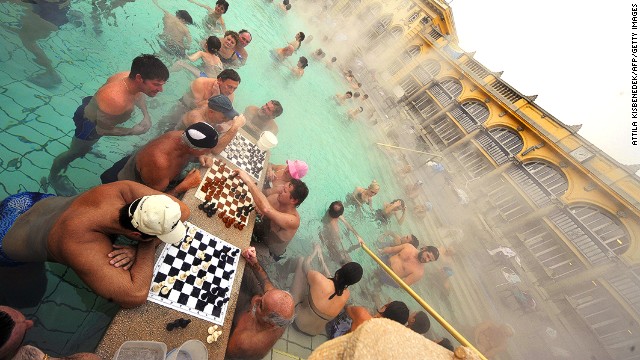
There are more than 1,000 natural springs in the country (and the world's largest thermal lake at Hévíz, near Lake Balaton), with 118 in Budapest alone.
On the Pest side of the river in the capital, Széchenyi Thermal Baths (Állatkerti körút 9-11, 1146 Budapest; +36 1 363 3210) claims to be the biggest thermal bathing complex in Europe.
Another good Budapest bathing spot is the art nouveau Gellért Baths and Hotel (Kelenhegyi út 4, 1118 Budapest; +36 1 466 6166), at the foot of Gellért Hill.
3. Hungarians are smart; just ask the people at Nobel
For my next trick, I will now invent something else.
The country has one of the highest rankings, per capita, for Nobel laureates, with 13 winners going back to their first, in 1905 (for physics), and the most recent, in 2004 (for chemistry).
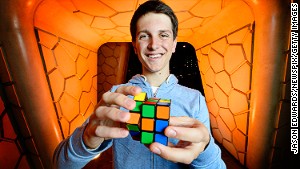
Hungarians have also invented many things, from the biro ballpoint pen (named for inventor László Bíró) to computer science (János Neumann) to Rubik's cube.
For my next trick, I will now invent something else.As minister of state for economic strategy Zoltán Cséfalvay recently said: "I am very proud to be able to say that everything was invented by a Hungarian."
He was joking.
Sort of.
4. Franz Liszt is still huge
The composer is such a big deal here that, although he was born in what is now Austria, spoke German and French but no Hungarian and died in Germany, they renamed Budapest International Airport in his honor for the anniversary of his 200th birthday, in 2011.
The reason?
The village he was born in was Hungarian at the time, and he described himself as Hungarian.
Liszt Ferenc (in the Hungarian naming convention, the family name always goes first) also has a square named for him in Pest.
Surrounded by trendy cafes and restaurants, it's extremely popular in summer.
5. The 'little gate' is a way of life
Forty years of communism left Hungarians expert at finding what they call "the little gate," an alternative way in, a work around.
They're reputed to be the only people who can enter a revolving door behind you and emerge ahead.
They also have an opinion on everything, so much so that it's said if you have three Hungarians in a room, they'll form four political parties.
6. Goulash isn't what you think it is
It is ghoulash, but not as you know it.It is ghoulash, but not as you know it.
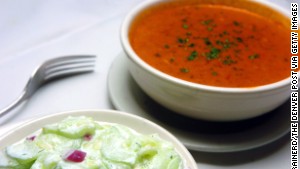
The signature national dish is gulyás, which you probably know as goulash.
What's served in Western restaurants, however, is usually a stew, while what you get in Hungary is a soup.
Everyone claims to have the best recipe, with an annual goulash festival held each September in Szolnok (120 kilometers southeast of the capital in central Hungary).
The version at one of Budapest's best known restaurants, Gundel (Gundel Károly út 4, 1146 Budapest, next to Budapest Zoo entrance; +36 1 889 8100), will set you back HUF 3,800 ($17).
Around the corner, you can get a great bowl for HUF 1,900 at Bagolyvár (Gundel Károly út 4, 1146 Budapest; +36 1 468 110; website in Hungarian), which is owned by Gundel but specializes in home-style cooking.
7. Hungarians are addicted to a red powder
There's one element of Hungarian cuisine that's present in every kitchen, from Grandma's to that of the country's first Michelin-starred restaurant, Costes (Ráday utca 4, 1092 Budapest; +36 1 219 0696): paprika.
The powdered pepper is used to spice up just about every dish -- especially goulash.
It's so important it was national news when spice and sauce maker Univer announced in late October that its paprika-based condiments would continue to be made from 100% Hungarian produce, despite a poor harvest.
8. Clinking beer glasses is frowned upon
Walk along Budapest's answer to London's Soho -- the pedestrianized Ráday utca teeming with bars, restaurants and galleries in the center of Pest -- and you'll hear little clinking of beer glasses.
When the Hungarians lost the 1848-49 Revolution and War of Independence, Austrians executed 13 of the most senior Hungarian generals, and supposedly celebrated by drinking beer and clinking their mugs.
Hungarians vowed not to clink beer glasses for the next 150 years.
Although that period ended in 1999, the "ban" is still widely observed, especially among more elderly people.
It's fine to clink wine and spirit glasses.
9. Tokaji is the Wine of Kings
Sweet ending to every meal.Sweet ending to every meal.
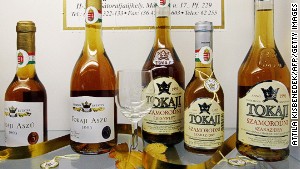
Tokaji is so good that Louis XIV of France called it the "Wine of Kings, the King of Wine."
If you want to take a bottle of the sweet dessert wine home you'll find it in most wine shops -- Bortársaság (Wine Society) has locations across Budapest and the country.
Tokaji is measured by its sweetness, shown by the number of "puttonyos."
A good example of the topaz-colored wine is Tokaji Aszú -- look for four puttonyos or more (the scale goes up to six).
The best Tokaji (also rarest and most expensive) is the Essencia style.
10. Hungarians are sports mad
Hungarians love sports and are extremely proud of the fact that, per capita, the country has one of the highest tallies of Olympic medals (482 across both winter and summer games).
They continue to do well at fencing, swimming, gymnastics and kayaking, but the men's water polo team is exceptional -- you'll find Hungarians gathered around TVs everywhere when the latter are playing.
If you want to get a feel for the Hungarian love of sports (and beer), Champs Sport Pub (Dohány utca 20, 1074 Budapest; +36 1 413 1655), in Pest, is a good venue for watching sport among Hungarians, but be warned it gets packed for big events.
11. Equestrian traditions are very much alive
The Hungarians rode into the Carpathian Basin -- the central European territory they conquered -- on horseback and have been in love with things equine ever since.
Their famed light cavalry gave English the word Hussar (from the Hungarian "Huszár").
The current coach-driving world champions are the Lázár brothers, who hold regular horse shows at the Lázár Equestrian Park in Domonyvölgy (Fenyő utca 47, 2182 Domonyvölgy; +36 28 576-510), about 35 kilometers from Budapest.
There are plenty of other places throughout the country to take riding lessons or simply go for a hack.
A good choice is the Hilltop Riding Farm (Repülőtéri út 0117/ 15 hrsz, 2100 Gödöllő, Hungary; +36 30 636 8553), in the town of Gödöllő, outside Budapest.